Keynote Talks
| Name | Affiliation | Title |
|---|---|---|
| Prof. Dr. Alois Ferscha |
Johannes Kepler Universität Linz AUSTRIA |
Spatial Zones of Influence |
| Dr. Artur Lugmayr |
Tampere University of Technology FINLAND |
Mobile Ambient Media – Between Human, Art, and Technology |
| Prof. Dr. Hanna Risku |
Donau-Universität Krems AUSTRIA |
Interaction and Cognition in the Wild, Wild Web: Like Graved Salmon on the Cold Buffet |
| Zoé Lacroix |
Arizona State University USA |
Resource Discovery and Reasoning on Resources |
| Prof. Dr. Abdelkader Hameurlain |
Paul Sabatier University FRANCE |
Mobile Agent-based Data Management in Grid Systems |
Spatial Zones of Influence
|
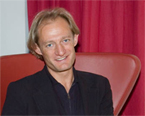
Univ.Prof. Dr. Alois Ferscha Institut für Pervasive Computing Johannes Kepler Universität Linz Altenberger Strasse 69, 4040 Linz, Austria ferscha_AT_soft.uni-linz.ac.at http://www.soft.uni-linz.ac.at |
|
Abstract
Built with networked embedded systems technology, everyday objects like appliances, tools and environnments – in general: "Digital Artefacts" – become increasingly interconnected, diverse and heterogeneous, raising the challenge of an operative, and semantically meaningful interplay among each other.
One approach to address this challenge is to design and implement systems able to "manage" and to "organize" themselves.
Self-management stands for the ability of single Digital Artefact to describe itself, to select and use adequate sensors to capture information, and to describe its context.
Self-organizing stands for the ability of a group of possibly heterogeneous digital artefacts to establish a spontaneous network based on interest, purpose or goal, and to negotiating and fulfilling a group goal.
Thus, while self-management relates to individual artefacts, and concerns adaptation to changing individual goals and conditions at runtime, self-organization relates to whole ensembles, and concerns adaptation in order to meet group goals.
This presentation will address the issue of spatially constrained spontaneous interaction among Digital Artefacts.
An explicit model for spatial proximity is investigated based on geometric descriptions of "Zones of Influence" (ZoI) of artefacts, enabling the triggering of their interactions based on real time verification of relations among ZoIs (intersection, inclusion).
Once in spatial proximity to each other, verified by e.g. colliding ZoIs, artefacts coordinate their activities based on the exchange and analysis of self descriptions in metadata format.
Self descriptions are encoded in a profile description language, expressing role, preferences, intent and goals of an artefact with respect to the particular context in which an interaction is attempted (like time, geoposition, relative position and orientation, environmental conditions, etc.).
I will present the Peer-it platform, able to sense the context of a Digital Artefact, particularly its absolute and relative position and orientation.
Together with the ability to exchange self descriptions and ZoIs via wireless communication, the Peer-it technology opens the road towards spatially aware digital artefacts.
Short Biography
Prof. Alois Ferscha was with the Department of Applied Computer Science at the University of Vienna at the levels of assistant and associate professor (1986-1999).
In 2000 he joined the University of Linz as full professor where he heads the Excellence Initiative "Pervasive Computing", the department of Pervasive Computing, the Research Studio Pervasive Computing Applications (as Part of ARC Austrian Research Centers, Seibersdorf) and RIPE (Research Institute of Pervasive Computing).
Ferscha has published more than a hundred technical papers on topics related to parallel and distributed computing.
Currently he is focused on Pervasive and Ubiquitous Computing, Embedded Software Systems, Wireless Communication, Multiuser Cooperation, Distributed Interaction and Distributed Interactive Simulation.
He has been a visiting researcher at the Dipartimento di Informatica, Universita di Torino, Italy, at the Dipartimento di Informatica, Universita di Genoa, Italy, at the Computer Science Department, University of Maryland at College Park, College Park, Maryland, and at the Department of Computer and Information Sciences, University of Oregon, Eugene, Oregon, U.S.A.
He has been the project leader of several national and international research projects.
Some of his recent involvements in projects are InterLink (funded by IST FET), BEYOND THE HORIZON (funded by IST FET), CRUISE NoE – Creating Ubiquitos Intelligent Sensing Environments (IST FP6), SPECTACLES (Autonomous Wearable Display Systems) in cooperation with Silhouette International, INSTAR (Information and Navigation Systems Through Augmented Reality) (2001-2003), Siemens München, AG, CT-SE-1, BISANTE, EU/IST, Broadband Integrated Satellite Network Traffic Evaluation (1999-2001), Peer-to-Peer Coordination (2001– ), Siemens München, AG, CT-SE-2, Context Framework for Mobile User Applications (2001– ), Siemens München, AG, CT-SE-2, WebWall, Communication via Public Community Displays, Connect Austria (2001-2002), VRIO, Virtual Reality I/O, with GUP JKU, IBM Upper Austria (2002-2003), MobiLearn, Computer Science Any-Time Any-Where, (2002-2004), Mobile Sports Community Services, (SMS Real Time Notification at Vienna City Marathon 1999, 2000, 2001, 2002; Berlin Marathon 2000, 2001, 2002), etc.
He has served on editorial boards of renowned international scientific journals (e.g. Pervasive and Mobile Computing (Elsevier), Transactions of the Society for Computer Simulation), on steering and programme committees of several conferences like PERVASIVE, UMBICOMP, ISWC, WWW, PADS, DIS-RT, SIGMETRICS, MASCOTS, MSWiM, MobiWac, TOOLS, Euro-Par, PNPM, ICS, etc. to name a few.
His activities and recognition in the parallel and distributed simulation community is expressed by his being the General Chair of the IEEE/ACM/SCS 11th Workshop on Parallel and Distributed Simulation (PADS'97), has served on the committees of several conferences, the Program Committee chair for the PADS'98, Program Committee chair for the Seventh International Symposium on Modeling, Analysis and Simulation of Computer and Telecommunication Systems (MASCOTS'99), and recently the 12-th IEEE International Symposium on Distributed Simulation and Real Time Applications (DS-RT 2008).
Mobile Ambient Media - Between Human, Art, and Technology
|
Dr. Artur Lugmayr Tampere University of Technology POB. 553, Korkedkolunkatu 1, 33100 Tampere, Finland lartur_AT_acm.org http://www.cs.tut.fi/~lartur/ |

|
Abstract
The medium is the message – and the medium is more and more distributed throughout the natural environment of the consumer. Smart mobile phones, location based services, smart fridges, intelligent homes, and objects that think are just a few examples. These form of media is called ambient media – media transmitting information and knowledge in our daily living environments. This keynote addresses emerging service types and covers mobile ambient media from the human, artistic, and technology viewpoint. Latest trends coming from social media, pervasive mobile computation, ubiquitous communication, and technological enabler are presented. Another question addressed is how emerging content forms might look like. After the more visionary viewpoint, down-to-earth business cases of successful ambient media services are presented. However, the future is 'ambient'.
Short Biography
Dr.-Techn. Artur Lugmayr describes himself as a creative thinker and his scientific work is situated between art and science. His vision can be expressed as to create media experiences on future emerging media technology platforms. He is the head and founder of the New AMbient MUltimedia (NAMU) research group at the Tampere University of Technology (Finland) which is part of the Finnish Academy Centre of Excellence of Signal Processing from 2006 to 2011 (http://namu.cs.tut.fi). He is holding a Dr.-Techn. degree from the Tampere University of Technology (TUT, Finland), and is currently engaged in Dr.-Arts studies at the School of Motion Pictures, TV and Production Design (UIAH, Helsinki). He chaired the ISO/IEC ad-hoc group "MPEG-21 in broadcasting"; won the NOKIA Award of 2003 with the text book "Digital interactive TV and Metadata" published by Springer-Verlag in 2004; representative of the Swan Lake Moving Image & Music Award (http://www.swan-lake-award.org/); board member of MindTrek (http://www.mindtrek.org), EU project proposal reviewer; invited key-note speaker for conferences; organizer and reviewer of several conferences; and has contributed one book chapter and written over 25 scientific publications. His passion in private life is to be a notorious digital film-maker. He is founder of the production company LugYmedia Inc. (http://www.lugy-media.tv). More about him on Google.
Interaction and Cognition in the Wild, Wild Web: Like Graved Salmon on the Cold Buffet
|
Univ.-Prof. Dr. Hanna Risku Department für Wissens- und Kommunikationsmanagement Donau-Universität Krems Dr.-Karl-Dorrek-Straße 30, 3500 Krems, Austria Phone: +43 (0)2732 893 2330 Fax: +43 (0)2732 893-4335 hanna.risku_AT_donau-uni.ac.at |

|
Abstract
Taking human cognitive and interactive capabilities into account in the design of multimedia and web applications is now common and accepted.
However, aside from the verbal recognition of the importance of the cognitive aspects and their implementation through Usability and Human Factors,
I maintain that their consequences have not systematically changed new product development and design practices.
Even the established Cognitive Science approaches like Situated, Embodied Cognition view (which has been going strong since the 1980s)
play a minor role in comparison to technical possibilities, process management and economic considerations in the development phase.
At times, cognition even seems to be accorded a role similar to the one given to invited speeches by psychiatrists by Hector,
the main character in Francois Lelord’s novels: They are like the Gravad Lax on a buffet – it might not always be good,
but if it’s not there people are bound to notice it is missing.
So what effect would it have if we took the Situated, Embodied Cognition view seriously?
Would it really make a difference in design and development practices?
And would it make a difference to the implementation of even older cognitive approaches like the Symbol Manipulation (Information Processing)
or Connectionist (Parallel Distributed Cognition) views that might play a background role in guiding professional practices?
This speech draws parallels between the development of Cognitive Science and HCI/Usability and puts forward the claim that a serious consideration
of current thinking and knowledge regarding the situatedness and embodiment of human cognition fundamentally changes our assumptions and actions regarding
- the role of schemes,
- the role of situations,
- the role of intentions and functions,
- the role of tools and environments, and
- the role of cooperation.
Resource Discovery and Reasoning on Resources
|
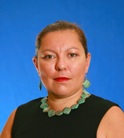
Zoé Lacroix Translational Genomics Research Institute 13400 E. Shea Blvd Scottsdale, AZ 85259, USA and Arizona State University Tempe AZ 85281-5706, USA zoe.lacroix_AT_asu.edu |
|
Abstract
A resource corresponds to an information source such as a data repository or database management system
(e.g., a query form or a textual search engine), a link between resources (an index or hyperlink), or a service such as an application or tool.
Resources are characterized by core information including a name, a description of its input and its output (parameters or format), its address,
and various additional properties expressed as metadata.
Resource discovery is the process of identifying and locating existing resources that have a particular property.
Machine-based resource discovery relies on crawling, clustering, and classifying resources discovered on the Web automatically.
Resources are organized with respect to metadata that characterize their content (for data sources),
their semantics (in terms of ontological classes and relationships), their characteristics (syntactical properties),
their performance (with metrics and benchmarks), their quality (curation, reliability, trust), etc. Resource discovery systems allow the
expression of queries to identify and locate resources that implement specific tasks.
Resources are discovered on the Web to implement a variety of tasks often composed into complex workflows.
Resource discovery thus first aims at identifying a resource that performs the expected task
(semantics) and that is compatible with the other resources it has to be connected to (syntax).
We show that the validation of those two levels of constraints may be achieved by reasoning on resources.
We present a deductive approach that supports resource discovery.
The BiOnMap Web service is designed to support the selection of resources suitable to implement specific tasks.
The BiOnMap service is comprised of a metadata catalog and a reasoning engine.
The metadata catalog uses domain ontologies to annotate resources semantically and
express domain rules that capture path equivalences at the level of the ontology graph.
The BiOnMap reasoning engine is able to infer new properties of services to support service discovery, composition, and mapping.
We illustrate our approach with an application case from the domain of bioinformatics.
Short Biography
Zoé Lacroix received her Ph.D. in Computer Science in 1996 from the University of Paris XI – Orsay (France). She has been a researcher at the French Institut National de la Recherche en Informatique et Automatique (INRIA), at the Institute for Research in Cognitive Science (IRCS) at the University of Pennsylvania (USA), and at two biotech companies Gene Logic and at SurroMed, where her research focused on bioinformatics and scientific data management. She currently holds a joint appointment as an Associate Professor of Research at Arizona State University and an Associate Investigator at the Pharmaceutical Genomics Division of the Translational Genomics Research Institute (TGen) where she is directing various projects on scientific data management, database integration, optimization, workflows, and Semantic Web. She co-edited the first textbook on scientific data management, entitled "Bioinformatics: Managing scientific Data" and published by Morgan Kaufmann in July 2003, and is the Principal Investigator of research projects funded by the National Science Foundation and National Institutes of Health: National Institute on Aging and National Library of Medicine.
Mobile Agent-based Data Management in Grid Systems
|
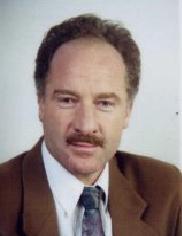
Prof. Dr. Abdelkader Hameurlain Institut de Recherche en Informatique de Toulouse (IRIT) Paul Sabatier University 118, Route de Narbonne, 31062 Toulouse Cedex, France Phone: +33 (0) 5 61 55 82 48/74 43 Fax: +33 (0) 5 61 55 62 58 hameur_AT_irit.fr |
|
Abstract
Since ten years, the Grid systems are hot research topics. Recently, the Grid systems open towards the management of heterogeneous and distributed data on a large-scale environment. The Grid data management raises new problems and presents real challenges: (i) resource discovery and allocation, (ii) query processing and optimization, (iii) monitoring services, (iv) replication and caching, (v) cost models, (vi) autonomic data management, and (vii) security. The main characteristics offered by these systems are: large scale (e.g. high numbers of data sources, and computing resources) and dynamicity of nodes (unstable system). The synergy and convergence of interests between Grid systems and agent systems have been clearly pointed out. To address some of the above problems, a complementary approach (with respect to web services and P2P techniques) based on mobile agents deserves to be explored. In this talk, we draw up a synthetic state of the art of using mobile agents to solve some fundamental problems of data management in grid systems (e.g. resource discovery and allocation, distributed query and optimization, monitoring services for query optimization, cost models). We point out the advantages of mobile agents and how they can help for decentralized control, and scaling.
Short Biography
Abdelkader Hameurlain is full professor in Computer Science at Paul Sabatier University, Toulouse, France. He is a member of the Institute of Research in Computer Science of Toulouse (IRIT). His current research interests are in query optimization in parallel and large scale distributed environments, mobile databases, and database performance. Prof. Hameurlain has been the general chair of the International Conference on Database and Expert Systems Applications (DEXA'02). He was guest editor of two special issues of "International Journal of Computer Systems Science and Engineering on "Mobile Databases" and "Data Management in Grid and P2P Systems".